
Energy Donation and Drain in Human Beings: A Neurobiological and Psychospiritual Perspective
May 23, 2025
Human interactions are not merely verbal or behavioural exchanges—they are energetic phenomena that can nourish or deplete.
Within a growing interdisciplinary framework that integrates neuroscience, psychology, and alternative health paradigms, two interrelated concepts have emerged:
1. Energy donation
2. Energy drain.
These processes are increasingly recognized as significant factors in individual well-being, with measurable effects on hormonal responses and subjective vitality.
1. Defining Energy Donation and Drain
Energy Donation refers to the transfer of vitality, emotional support, or uplifting presence from one person to another. It may occur consciously (e.g., intentional encouragement) or unconsciously (e.g., calming presence).
Energy Drain occurs when an individual’s psychological, emotional, or physical energy is depleted during or after interactions. This may be due to emotional labour, conflict, overexposure to negativity, or empathic overload.
These interactions impact both the nervous system and endocrine responses, affecting mood, motivation, and mental clarity.
2. Happy Hormones and Energy Donation
Energy donation has been associated with the stimulation and release of several key neurochemicals that enhance psychological and physiological health:
Oxytocin (“bonding hormone”): Released through acts of care, trust, and emotional intimacy. Oxytocin facilitates emotional warmth, strengthens relationships, and enhances resilience.
Dopamine (“reward hormone”): Activated during acts of kindness, generosity, or recognition. It fosters motivation, pleasure, and focus.
Serotonin (“mood stabilizer”): Increases when one feels respected, connected, or purposeful. It promotes emotional regulation and well-being.
Endorphins (“natural painkillers”): Triggered by laughter, joy, and positive social interaction. They reduce stress and boost energy.
Result: When individuals engage in authentic, affirming interactions, they not only uplift others but also biochemically recharge themselves, enhancing mood, immune function, and overall vitality.
3. Hormonal Impact of Energy Drain
Conversely, energy-draining interactions trigger physiological responses associated with stress, fatigue, and emotional burnout:
Cortisol (“stress hormone”): Elevated during conflict, emotional overexertion, or exposure to negativity. Prolonged high cortisol impairs memory, sleep, and immune response.
Adrenaline/Noradrenaline: Released during confrontations or overstimulation, leading to increased heart rate, tension, and eventual exhaustion.
Serotonin Depletion: Negative social experiences or perceived rejection may lower serotonin, contributing to irritability or depressive symptoms.
Oxytocin Suppression: Lack of emotional safety or ongoing mistrust reduces oxytocin levels, weakening social bonds and increasing isolation.
Result: Repeated energy-draining experiences may lead to chronic stress, emotional dysregulation, and even long-term health effects such as burnout, anxiety, or depression.
4. Biopsychosocial Mechanisms of Energy Exchange
The body’s response to interpersonal energy dynamics is shaped by:
Neuroendocrine Feedback Loops: Hormonal responses influence energy, mood, and perception, which in turn shape behaviour and further hormonal release.
Affective Contagion and Resonance: Mirror neurons enable us to “feel” others’ emotional states, often leading to unconscious energy sharing or absorption.
Social Neurobiology: Human brains are wired for connection, meaning that social harmony naturally enhances energy flow, while conflict disrupts it.
5. Spiritual and Metaphysical Interpretations
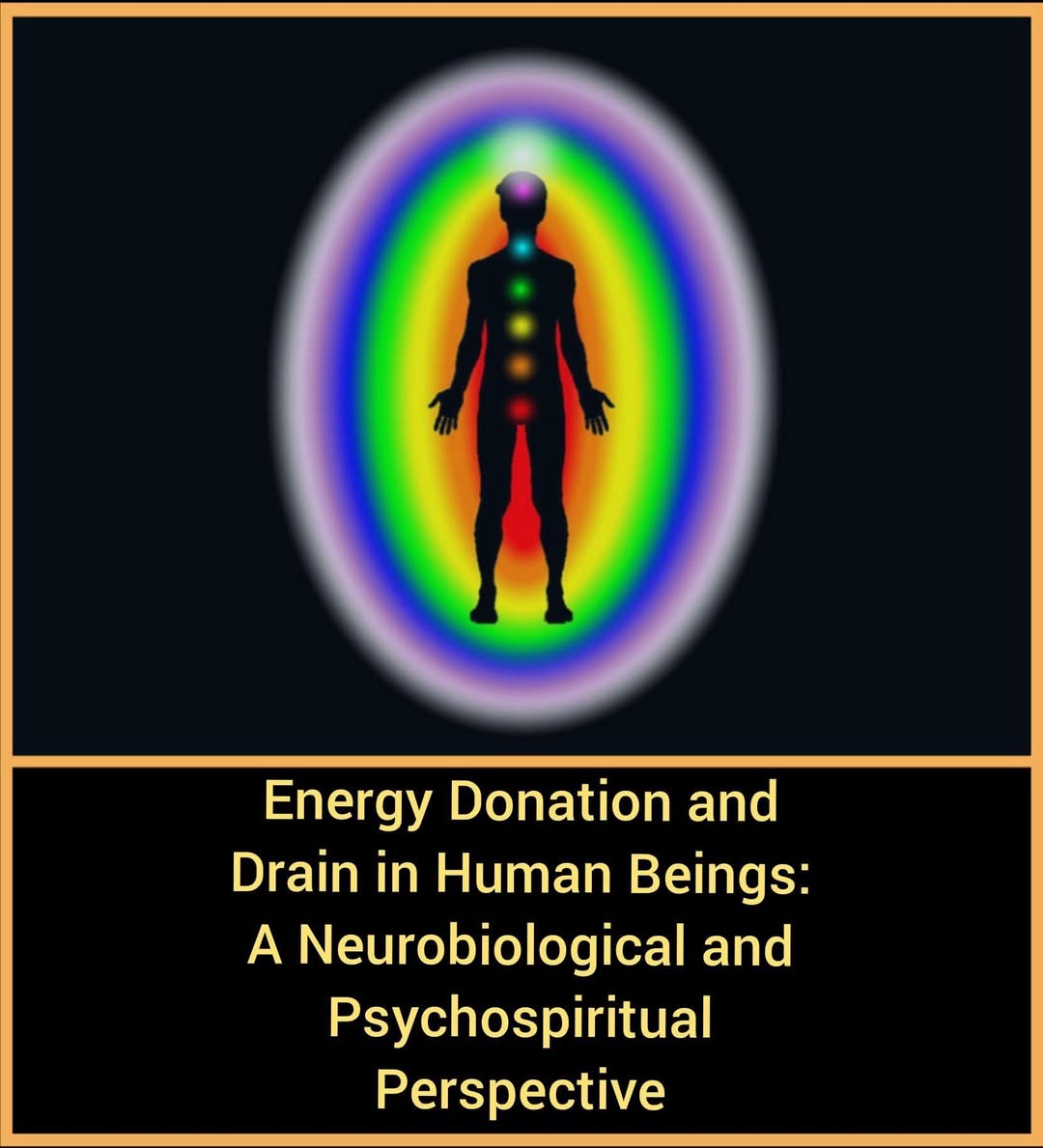
Alternative health traditions posit that humans are surrounded by subtle energy fields (often termed auras or biofields), which interact during social encounters. From this view:
Energy donation recharges the recipient’s biofield, creating balance and healing.
Energy drain results from entanglement with unbalanced or disruptive energies, weakening the energetic system.
Practices like reiki, qigong, pranic healing, and energy shielding are used to restore equilibrium and protect one’s energy boundaries.
6. Protecting and Cultivating Energetic Balance
To foster healthy energy exchange and regulate hormonal health, the following strategies are recommended:
Emotional Boundaries: Recognizing limits and disengaging from toxic interactions preserves energy and reduces cortisol spikes.
Conscious Giving: Offering support with awareness prevents overextension and encourages mutual uplift.
Restoration Practices: Meditation, time in nature, solitude, and sleep help replenish hormonal balance and energetic reserves.
Community and Connection: Engaging in supportive relationships boosts oxytocin, serotonin, and dopamine—replenishing energy through connection.
7. Scientific and Integrative Outlook
Although mainstream biomedical science does not fully recognize subtle energy fields, the physiological outcomes of social and emotional interaction are well-documented. Emerging fields like biofield research and energy psychology seek to bridge the gap between biochemistry and metaphysical models of health.
Conclusion
Energy donation and energy drain are not just metaphorical ideas but deeply embodied experiences that affect the human nervous and endocrine systems.
Through positive interactions, humans can boost beneficial hormones and restore vitality.
Conversely, prolonged energy-draining dynamics can elevate stress hormones and undermine well-being.
Integrating neurobiological insight with holistic practices provides a comprehensive framework for understanding and optimizing the energetic dimensions of human life.
References
Porges, S. W. (2011). The Polyvagal Theory. Norton.
Sapolsky, R. M. (2004). Why Zebras Don’t Get Ulcers. Holt.
van der Kolk, B. (2014). The Body Keeps the Score. Viking.
Gallese, V. (2009). Mirror neurons and empathy. Psychoanalytic Dialogues, 19(5).
Hammerschlag, R. et al. (2015). Biofield Physiology. Global Advances in Health and Medicine.
Uvnäs-Moberg, K. (1998). Oxytocin may mediate the benefits of positive social interaction and emotions. Psychoneuroendocrinology.




Leave a Reply