
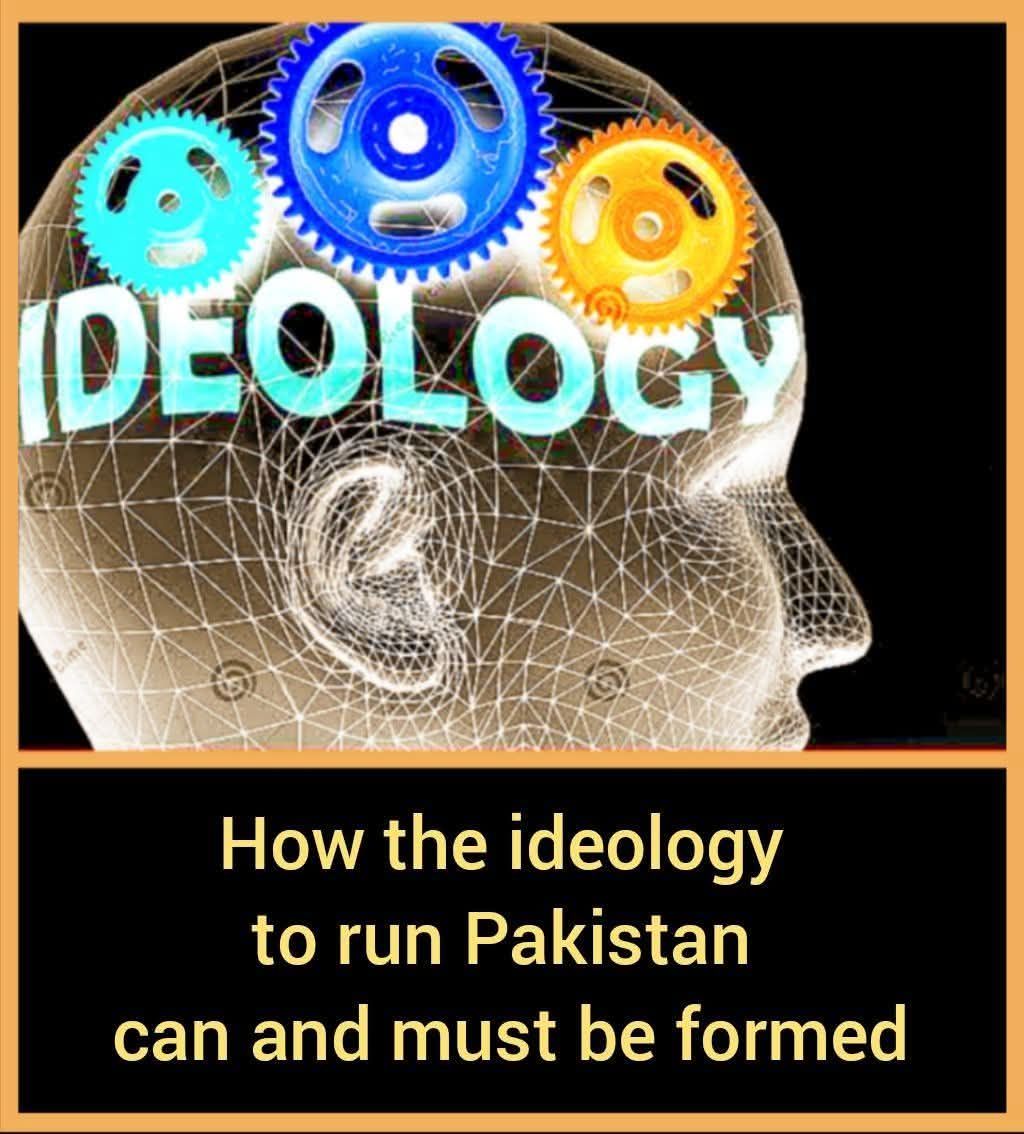
How the ideology to run Pakistan can and must be formed.
Date: May 5, 2025
The UP-CP Indians who came to Pakistan were neither landlords nor peasants, nor were they industrialists and labourers, nor were they traders and artisans. Most of the UP and CP residents who came to Pakistan were intellectuals and religious workers, journalists and social workers, politicians and political workers, military officers and soldiers, civil officers and clerks, lawyers and professionals.
Since the founding of Pakistan till now, Urdu-speaking Muslim Indians, who have been brought up at UP, CP and trained from Darul Uloom Deoband, Darul Uloom Nadwat Ulema, Barelvi Madrassas, Aligarh University and their descendants have ruled Pakistan according to their “Uttar Pradesh ideology”.
UP’s CP’s Urdu-speaking Muslim Indians had the “Uttar Pradesh ideology” that; Pakistanis are one nation. Not only their religion is the same, but their language is the same, their culture is the same, and their political interests are the same.
Undoubtedly, this one religion was the Islamic philosophy of the Deobandi and Barelvi schools of thought. One language was Urdu. One culture was their Ganga-Jumna culture, and one political interest was the political;, social, administrative, financial and economic superiority of UP-CP Urdu-speaking Muslims in Pakistan.
Despite having the same religion ؛
1. The majority of Pakistan’s Punjabi, Sammat, Brahui, Gilgit-Baltistan, Kohistani, Chitrali, Swati, Derawali, Gujarati, Rajasthani nations (Kashmiri, Hindko, Derawali are counted in the Punjabi nation) deviate from religious philosophy of Deobandi and Barelvi schools of thought and have views of “Sufism” for religious philosophy.
2. Their languages are different.
3. Their cultures are different.
4. They have their individual history associated with the “Indus Valley”.
5. They have their own unique national identities.
6. They have their own political; social, administrative, financial and economic interests.
By rejecting the “Uttar Pradesh ideology” of the UP-CP’s Urdu-speaking Muslim Indians, the Bengalis of East Pakistan separated themselves from Pakistan in 1971 and formed an independent country called Bangladesh. But;
1. Karachi currently has the largest population of descendants of UP-CP’s Urdu-speaking Muslim Indians in Pakistan.
2. It is no longer possible to run the political and governmental affairs of Karachi through intellectuals and religious workers, journalists and social workers, politicians and political workers, military officers and soldiers, civil officers and clerks, lawyers and professionals through descendants of UP-CP’s Urdu-speaking Muslim Indians and according to their “Uttar Pradesh ideology” and in the Urdu language. Therefore, how the political and governmental affairs of Pakistan can be run by them and with their ideology and in Urdu language?
UP-CP’s Urdu-speaking Muslim Indians;
1. “Language Training” was conducted at Fort William College, Calcutta from the 1800 century to onwards.
2. “Ideological Training” was conducted at Darul Uloom Deoband from 1866, at Darul Uloom Nadwat Ulema from 1893 and at Barelvi Madrassas from 1904.
But Punjabi, Sammat, Brahui, Gilgit-Baltistan, Kohistani, Chitrali, Swati, Derawali, Gujarati, Rajasthani intellectuals and religious workers, journalists and social workers, politicians and political workers, military officers and soldiers, civil officers and clerks, lawyers and professionals since the founding of Pakistan;
1. Were not trained in “ideological institutions” by forming “Pakistani ideology” in their language and according to their ideology.
2. On the contrary, attempts were made to impose the language and ideology of the people of Uttar Pradesh on them.
As, nor have they been properly trained in “ideological institutions” according to the “Pakistani ideology” and in their language. Therefore, they have not yet had a “Pakistani ideology” to run Pakistan’s political and governmental affairs;
1. So according to which “ideology” will Pakistan be run now?
2. Can a country be run without “ideology”?
3. Isn’t running Pakistan according to “Uttar Pradesh ideology” and in Urdu language or without “Pakistani ideology” increasing political instability; social unrest, administrative inefficiency, financial crisis and economic demotion?
The last and least but most important question is; How the ideology to run Pakistan can be formed?
1. Acknowledge the Plural National Reality of Pakistan.
Pakistan is not a homogenous nation-state; it is a plurinational state, composed of Punjabi, Sindhi (Sammat), Baloch, Brahui, Pashtun, Kohistani, Chitrali, Swati, Gujarati, Rajasthani, Hindustani Muhajir, and Gilgiti-Baltistani nations. (Kashmiri, Hindko and Dera Wali are included in the Punjabi Nation).
Ideology cannot be crafted around religious uniformity, Urdu language and Gunga Jumna cultural dominance; it must emerge from the historical, linguistic, and cultural realities of all these nations.
2. Build a New Ideological Framework for Pakistan Rooted in Indigenous Civilizational Ethos.
Instead of the Ganga-Jamuni or Aligarh-Deoband frameworks, the ideological base for Pakistan should draw on the Indus Valley Civilization, Sufi pluralism, and regional democratic traditions.
Each nation within Pakistan must contribute to the ideological foundation by documenting and presenting its view of statehood, governance, and shared coexistence.
3. Establish Ideological Institutions for Pakistan in Each National Language.
Just as UP-CP Muslims had Fort William College and Deoband/Nadwa/Barelvi institutions, similar academies and think tanks must be created in Punjabi, Sindhi (Sammat), Baloch, Brahui, Pashtun, Kohistani, Chitrali, Swati, Gujarati, Rajasthani, and Gilgiti-Baltistani.
These institutions should conduct language training, intellectual training, and policy education to develop leadership grounded in local consciousness and collective federal identity.
4. Convene a National Ideological Forum of Pakistani Nations.
A “Forum of Pakistani Nations” should be called, comprising representatives from each ethnonational community, tasked with:
Drafting the foundations of a Pakistani ideology based on justice, pluralism, and federalism.
Redefining national identity beyond religious majoritarianism.
Proposing governance frameworks respecting autonomy and mutual coexistence.
5. Replace Urdu-centric mononationalism with Multilingual Federal Pluralism.
The ideology must affirm the equal status of national languages in education, administration, and media.
Urdu may remain a link language, but the ideological narrative must be multilingual and multicultural, not derived from the UP-CP worldview.
6. Constitutional Recognition of Nationalities.
A reformed constitution must recognize the nations of Pakistan as equal partners, not as provinces or administrative units.
Each nation must have the right to:
Control its language, culture, education, and economy.
Participate in federal decision-making through proportional representation.
7. Curriculum Reform Across Pakistan.
Introduce a new ideological curriculum that teaches:
The real histories of each nation of Pakistan.
The philosophy of federalism and plural nationalism.
The mutual respect and sovereignty of national communities.
In Summary: How Can the Ideology to Run Pakistan Be Formed?
It can be formed through:
Recognition of all nations within Pakistan as equal partners.
Formation of national ideological institutions in local languages.
Rejection of the imposed UP-CP Urdu-Muslim ideology.
A Grand National Ideological Forum to draft a new social contract.
Federal restructuring is based on mutual respect, autonomy, and justice.
Educational and cultural reforms to foster a shared, plural identity.
—-
Author Biography
Dr. Masood Tariq is a Karachi-based politician and political theorist. He formerly served as Senior Vice President of the Pakistan Muslim Students Federation (PMSF) Sindh, Councillor of the Municipal Corporation Hyderabad, Advisor to the Chief Minister of Sindh, and Member of the Sindh Cabinet.
His research explores South Asian geopolitics, postcolonial state formation, regional nationalism, and inter-ethnic politics, with a focus on the Punjabi question and Cold War strategic alignments.
He also writes on Pakistan’s socio-political and economic structures, analysing their structural causes and proposing policy-oriented solutions aligned with historical research and contemporary strategy.
His work aims to bridge historical scholarship and strategic analysis to inform policymaking across South Asia, Central Asia, and the Middle East.


Leave a Reply