
What happened in West Punjab was repeated in East Punjab from July and August 1947.
April 30, 2025
When the creation of Pakistan and India was announced by the British government under the “Indian Independence Act” on 15 August 1947, then Punjab was neither in Pakistan nor in India. On August 15, 1947, Pakistan, consisting of Sindh, Balochistan and the North-West Frontier Province, came into existence as a Muslim State.
Since the Muslim League’s “Direct Action Day”, increasing incidents of sectarian violence and mass killings in Punjab had confused the Muslim League Leaders and the Muslim League as a party as a whole. Because they were unable to control the growing hatred on religious grounds. Therefore they were confused.
The Punjab Provincial Muslim League broke its silence after the central leadership of the Muslim League announced to organise the celebrations in Karachi on August 15, 1947, to celebrate the creation of Pakistan. On August 14, 1947, Sardar Shaukat Hayat Khan, as the spokesperson of the Punjab Muslim League, stated in Lahore that the Provincial Muslim League of Punjab had decided that;
1. On the occasion of the establishment of Pakistan on August 15, 1947, there will be no celebrations or rejoicing anywhere in West Punjab.
2. The day will be dedicated to prayer gatherings, especially after Friday prayers, for the glory and honour of Punjab and the safety and security of Punjabi Muslims in the Muslim minority areas of Punjab.
On August 15, celebrations were held in Karachi to celebrate the creation of Pakistan and Muhammad Ali Jinnah was sworn in as the Governor General of Pakistan while Liaquat Ali Khan was sworn in as the Prime Minister of Pakistan.
As a result of the riots that started in Punjab due to the announcement of the partition of Punjab, corpses were piled up in Punjab. There was mourning in Lahore too. The surviving Punjabis were carrying the dead bodies of their people. Therefore, Pakistan’s first Independence Day was not celebrated in Lahore on August 15.
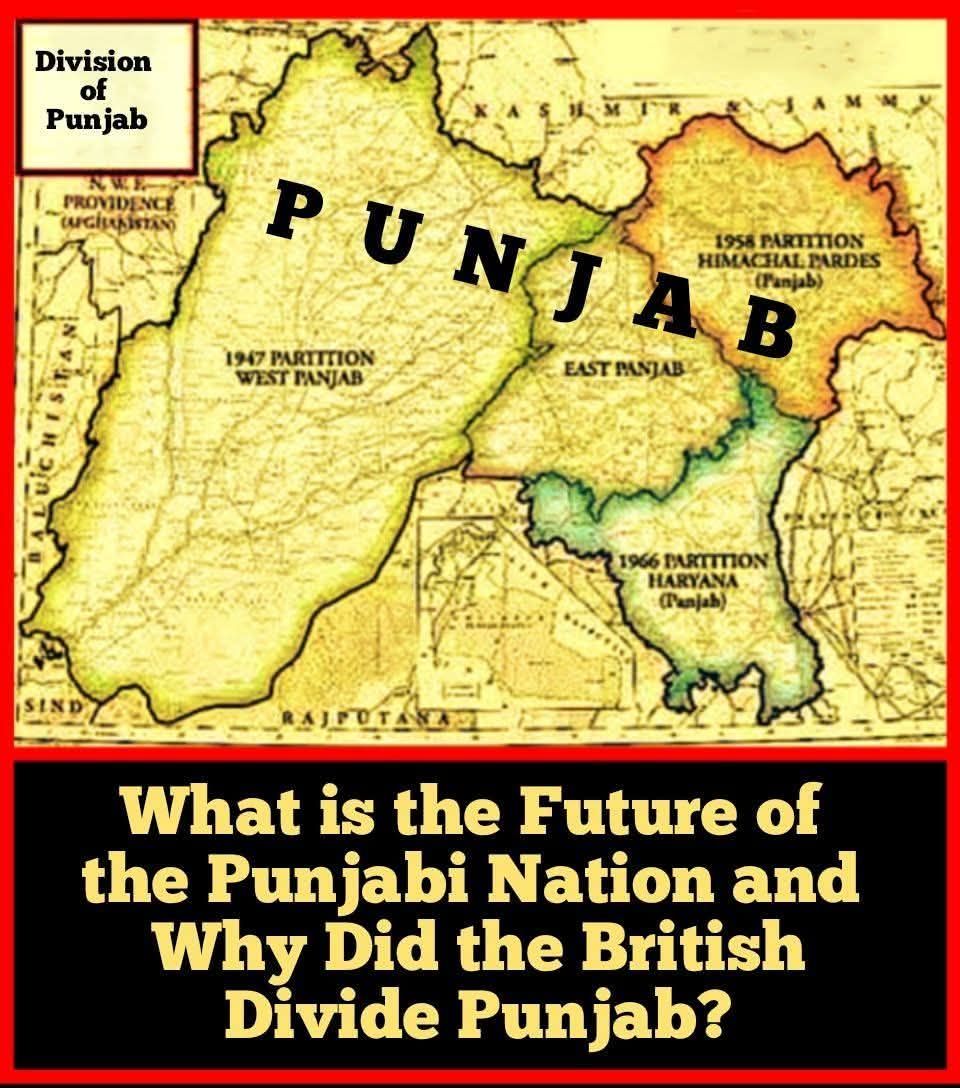
2 days after the creation of Pakistan, on 17th August 1947, the “Red Cliff Line” was drawn and Punjab was divided 17 Muslim Punjabi majority districts were added to Pakistan and 12 Hindu Punjabi and Sikh Punjabi majority districts were added to India and Punjabi were informed that;
1. Which districts of Punjab have been included in Pakistan and which districts have been included in India?
2. It was also informed that the Gujarati Muhammad Ali Jinnah had been made the Governor General of Pakistan, and an Urdu-speaking Indian from Uttar Pradesh, Liaquat Ali Khan, had been made the Prime Minister of Pakistan.
After the partition of Punjab on August 17, 1947, migration started and riots started to increase. Due to this, more than 2 million Punjabis were killed and 20 million Punjabis were displaced.
Time magazine of September 1947 gave the figure of 1 million Punjabis killed. These were the figures till September. By October, the number had risen to more than 2 million, and it was the largest human genocide since World War II. According to recorded history, it was the largest genocide of humans to occur within a short period.
UNHCR estimates that; After the partition of Punjab, 1.4 million Muslim Punjabis, Hindu Punjabis, and Sikh Punjabis became homeless. These were the figures till September. By October, the number had risen to more than 20 million, making it the largest short-term migration in human history.
An aspect of the killings and looting caused by the partition of Punjab for the creation of Pakistan, which is often overlooked in Pakistan’s politics, is based on religious fanaticism. This includes violence against Sikhs and Hindus in North Punjab and NWFP (now Khyber Pakhtunkhwa) in March 1947.
A report titled 1947 Muslim League Attacks on Sikhs and Hindus in Punjab was compiled and released in 1991. In which there was a description of the massacre that;
01. The sectarian riots started in 1946 when the All India Muslim League decided to celebrate “Direct Action Day” in Calcutta.
02. On 2 March 1947, the Unionist Party government in Punjab was dismissed and the All India Muslim League failed to declare a parliamentary majority. As a result, Governor’s rule came into effect.
03. On 4 and 5 March 1947, the first attacks against Sikhs and Hindus took place in Lahore and Amritsar.
04. On the same dates, the Muslim League-led mob with full determination and full preparation attacked the helpless Sikhs and Hindus scattered in the villages of Multan, Rawalpindi, Campbellpur, Jhelum and Sargodha.
05. Weapons like daggers, swords, spears and firearms were provided to the murderous mob. A former civil servant in his autobiography stated that the supply of arms was sent from the Frontier Province and the money was provided by politicians in Delhi.
06. The killers had gangs of stabbers and their assistants. Auxiliaries would provide shields to the attacker. While the attackers would ambush the victim and dispose of his body if necessary. These killers were supported financially by the Muslim League and individual killers were paid cash based on the number of Sikhs and Hindus killed.
07. There were also regular patrolling parties in jeeps. Those used to kill any stray Sikh or Hindu.
08. On March 5, Sikh and Hindu students of Rawalpindi took out a protest procession against the Muslim League’s attempt to establish a ministry based on religion in Punjab. Police opened fire on the peaceful procession of Sikh and Hindu students. The Muslim League workers also attacked this procession. A fierce battle ensued. But Muslims suffered the most in this.
09. After that, at the instigation of a Muslim religious leader of Golra and a local leader, a large mob of Muslims from the rural areas of Rawalpindi started attacking the Sikhs and Hindus.
10. The attack on the villages of Rawalpindi began on 7 March 1947 and continued unabated for weeks. Wherever there were Sikhs and Hindus. They were victims of killing and looting from village to village. When Sikhs and Hindus were wiped out from one area, the war against Sikhs and Hindus would spread to other areas.
11. Thus, by the end of March, the Sikh and Hindu populations of Rawalpindi, Campbellpur and Jhelum districts were wiped out. While the helpless Sikhs and Hindus who survived were shifted to refugee camps. Which were established throughout Punjab and in the Sikh states.
12. Atrocities against Sikhs and Hindus in Hazara Division had already started from December 1946.
The said report details the killings and arson committed by Muslim mobs in Baffa, Shinkiari, Balakot and Mansehra (all in Hazara Division) during December 1946.
The bonds of friendship, sense of community and religious harmony were the first casualties of this terrible war. Thousands of Sikhs and Hindus, including women and children, were killed or injured at the hands of Muslim mobs. Those were supported by the All India Muslim League.
Therefore, the Sikh leaders also started threatening violence even before the partition because of the violence against the Sikhs by the Muslim League-backed goons.
The Sikhs said that; Do not respond to violence will not reduce the violence. Rather, it will increase violence more often.
Because of that; What happened in West Punjab was repeated in East Punjab from July and August 1947.
The massacres in East Punjab were a direct continuation of the pre-division of Punjab massacres, due to a specific religious interpretation in Pakistan for forming mobs to attack Sikhs and Hindus.
This famous narrative that; Only Muslims were victims of religious violence. Which was propagated through the textbooks and cultural programs of Pakistan. Nothing but deception.
Policymakers should present a balanced picture to future generations and try to promote fact-based studies. Otherwise, there is no other way to end violence in our society.
Leave a Reply