
Date: May 16, 2025
 Politics operates at three levels: local, provincial, and national.
Politics means managing the social, administrative, financial, and economic affairs of the people.
Identifying the causes behind failures in social, administrative, financial, and economic affairs and presenting programmes and methods to improve them is the essence of politics.
 For political stability, it is necessary that people enhance their Political Wisdom and Political Interaction by first participating in local politics, then provincial politics, and finally national politics.
 In countries where people participate in local, provincial, and national politics in accordance with their level of Political Wisdom and Interaction, political stability naturally follows.
 In countries where people do not participate according to their level of Political Wisdom and Interaction, political instability becomes inevitable.
 A nation deprived of political leaders becomes like a herd of sheep and goats without a guide. Instead of moving toward a destination, the herd runs in whatever direction it wishes.
Or the shepherd’s stick frightens the herd and scatters it, while the shepherd’s dogs struggle to regroup them. Yet the herd never reaches its destination.
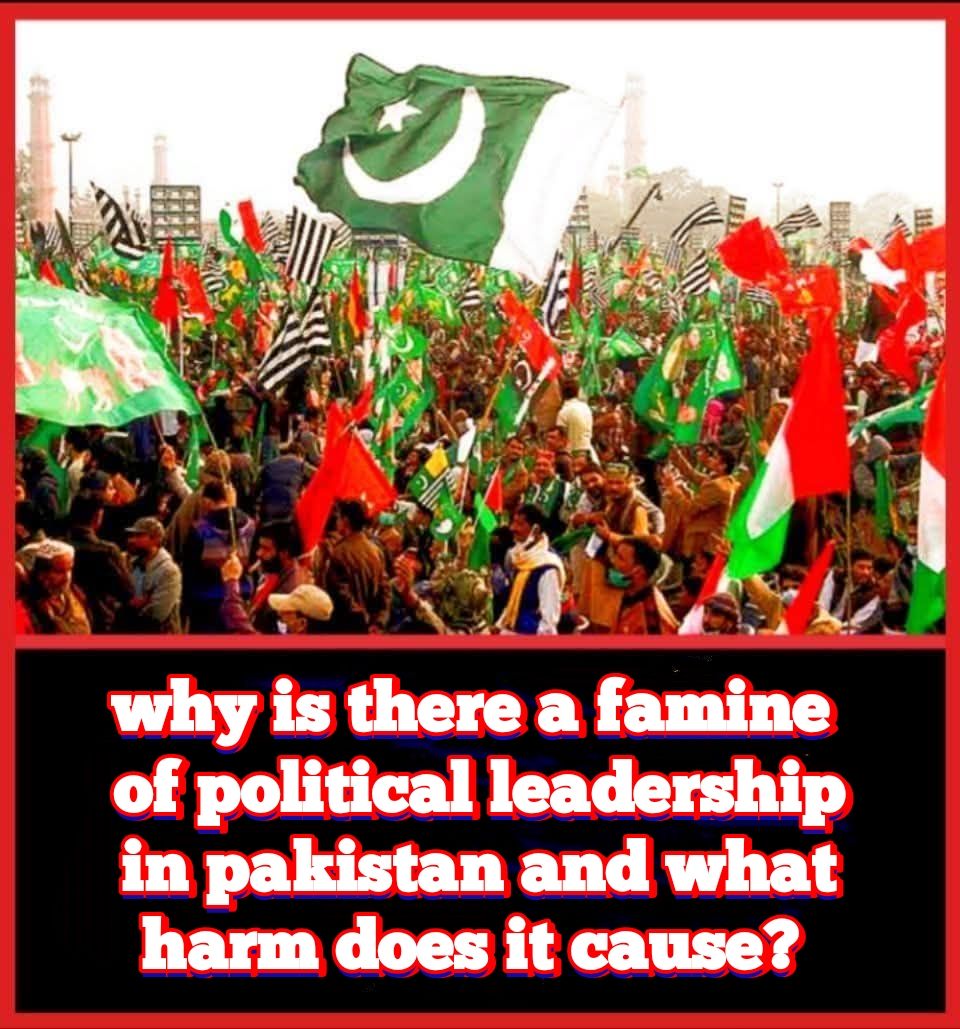
In Pakistan, due to a famine of political leadership, people have been deprived of genuine leaders. As a result, instead of moving toward national goals, they run in every direction.
Or the fear of the rulers’ stick pushes the public in a particular direction, while the rulers’ agents attempt to regroup them. Yet the people never reach their national destination.
 For national-level political stability, there should be:
• One person with national-level Political Wisdom per 100,000 people.
• One person with provincial-level Political Wisdom per 50,000 people.
But these ratios do not exist in Pakistan. Hence, Pakistan suffers from a national-level famine of political leadership.
 For provincial-level stability, there should be:
• One person with division-level Political Wisdom per 10,000 people.
• One person with district-level Political Wisdom per 1,000 people.
These ratios do not exist in Pakistan’s provinces. Therefore, the provinces face a provincial-level famine of political leadership.
 For local-level stability, there should be:
• One person with tehsil-level Political Wisdom per 100 people.
• One person with union-council-level Political Wisdom per 10 people.
These ratios are absent, causing districts to experience a local-level famine of political leadership.
As a result of this political famine, the people of Pakistan are deprived of political leaders at national, provincial, and local levels.
Most people possess only surface-level Political Wisdom. Thus, they tend to support or oppose political leaders not on the basis of political principles, but due to emotions or personal interests.
Because Political Wisdom is low and the capacity to understand higher political ideas is weak, higher political thinking is not appreciated.
Generally, very few people are impressed by knowledge and wisdom.
A larger number are impressed by family status and prestige.
Even more are impressed by wealth.
And the largest number are impressed by those who possess administrative influence and power.
Leave a Reply